

How to Choose the Right Marine Towing Line for Safe and Efficient Towing Operations
Release time:
2026-07-16
In modern port terminals, offshore projects, and ship-assist operations, selecting the right Marine Towing Line is essential for ensuring safety, efficiency, and long-term cost control. Different working environments, vessel sizes, and towing requirements require different rope structures and materials.
In modern port terminals, offshore projects, and ship-assist operations, selecting the right Marine Towing Line is essential for ensuring safety, efficiency, and long-term cost control. Different working environments, vessel sizes, and towing requirements require different rope structures and materials. A suitable Marine Towing Line should not only provide sufficient strength but also deliver reliable performance under dynamic loads, harsh weather, and frequent operations.

Key Factors When Choosing a Marine Towing Line
The first consideration is the required breaking load (MBL). Generally, the breaking strength of a towing line should provide an adequate safety margin based on the tug’s bollard pull and operating conditions. Buyers should also evaluate rope diameter, elongation, abrasion resistance, UV resistance, and handling requirements before making a decision.
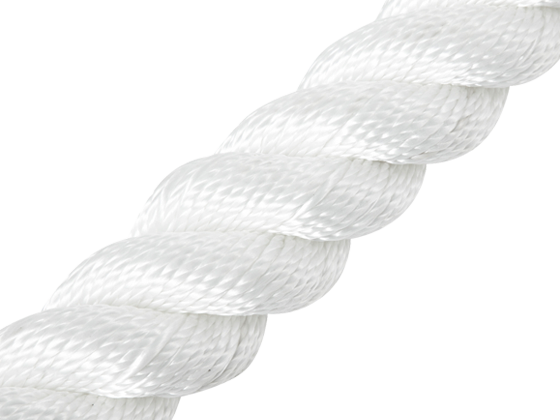
Material selection is another important factor. HMPE (High Modulus Polyethylene) ropes are widely used for their extremely high strength-to-weight ratio, lightweight handling, and low elongation, making them suitable for demanding port and offshore applications. Polyester towing lines offer excellent abrasion resistance, stable performance, and good energy absorption, while nylon ropes provide higher elasticity and shock absorption, which can help reduce impact loads during towing operations.
Service Life and Maintenance Tips
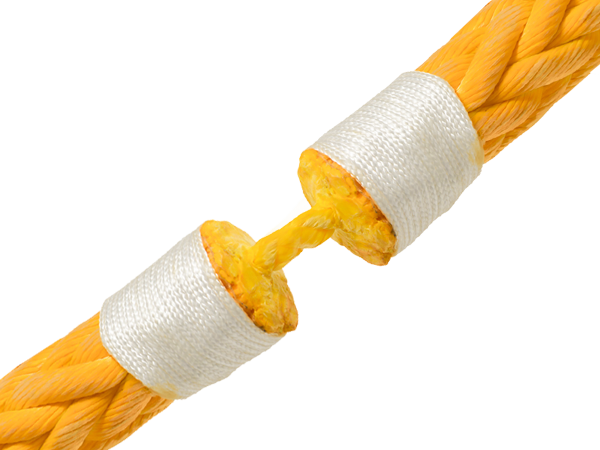
The service life of a Marine Towing Line depends on material quality, operating frequency, working environment, and maintenance practices. Regular inspection is necessary to identify damage such as excessive abrasion, fiber cuts, deformation, contamination, or splice wear.
To extend rope service life, operators should avoid overloading, store ropes away from direct sunlight and chemicals, keep them clean, and follow manufacturer recommendations for inspection and replacement. Proper maintenance can significantly reduce unexpected downtime and improve operational safety.
Testing Standards and Quality Assurance
A reliable Marine Towing Line should undergo strict quality testing, including minimum breaking load testing, elongation testing, splice strength evaluation, abrasion resistance testing, and cyclic loading tests. Products manufactured according to recognized marine requirements and classification standards provide better traceability and confidence for global buyers.
Common Questions from Buyers
Q: Is a synthetic towing line better than a steel wire rope?
A: Synthetic towing lines offer advantages such as lighter weight, easier handling, corrosion resistance, and reduced snap-back risks, making them increasingly popular in modern marine operations.
Q: How often should a towing line be replaced?
A: Replacement depends on usage conditions, inspection results, and manufacturer recommendations. Regular professional checks are more reliable than fixed replacement periods.
Yasheng Rope specializes in the development and production of high-performance Marine Towing Line solutions for ports, tugboats, offshore operations, and heavy-duty marine applications. With advanced synthetic fiber technology and strict quality control, Yasheng Rope provides reliable towing solutions designed for global marine customers.
Learn more about Yasheng Rope’s complete range of marine and offshore rope solutions by downloading our latest product catalogue. Detailed specifications, construction options, material information, and application guidance are available for your project evaluation.
Download Catalogue
Tel: +86-0532-86934438
Email: Frida@ys-rope.com
Recent information




DO YOU HAVE QUESTIONS?
Get In Touch With Us!
CONTACT US
Factory add :
55 #, Youdian Road, Qingfeng Industrial Park, Jianhu, Yancheng City, Jiangsu Province,China.
Office add :
No.198 JingGangShan Road, JinDing Tower,
16F 6-9, HuangDao, QingDao, ShanDong, China.


