

Nylon Rope:The Elastic Workhorse Redefining Port Terminal Safety and Global Marine Operations
Release time:
2026-07-21
Across the global maritime, offshore, and port terminal industries, the Nylon Rope has cemented its position as an indispensable asset for operations demanding controlled stretch, superior shock absorption, and reliable performance under dynamic conditions. From mooring lines at busy container terminals to towing hawsers supporting offshore vessels, the Nylon Rope directly influences berthing safety, crew efficiency, and operational continuity.
Across the global maritime, offshore, and port terminal industries, the Nylon Rope has cemented its position as an indispensable asset for operations demanding controlled stretch, superior shock absorption, and reliable performance under dynamic conditions. From mooring lines at busy container terminals to towing hawsers supporting offshore vessels, the Nylon Rope directly influences berthing safety, crew efficiency, and operational continuity.

Why Nylon Rope Performs Differently
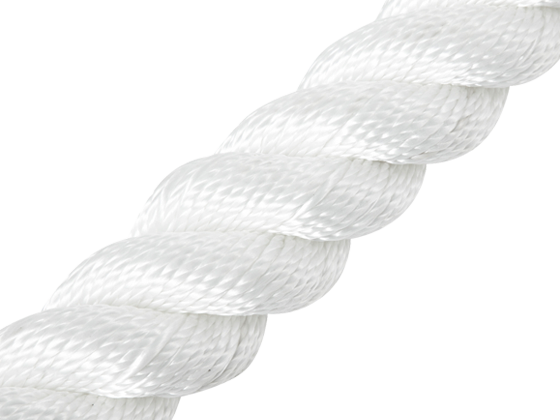
Unlike low-extension polyester or steel wire alternatives, a premium Nylon Rope—also known as polyamide rope—is engineered with a characteristic high extension under load, typically reaching up to 16% at 50% breaking load. This unique elasticity allows the Nylon Rope to stretch and recover under surge loads, absorbing peak dynamic forces that would otherwise transfer directly to bollards, cleats, and deck hardware. The result is a mooring system that is more forgiving of sudden load spikes, significantly reducing stress on terminal infrastructure and extending the service life of both lines and equipment.
Beyond its superior elasticity, Nylon Rope is also valued for its excellent strength-to-weight ratio and outstanding tensile performance. High-quality nylon fibers provide high breaking strength while maintaining flexibility, making Nylon Rope suitable for heavy-duty mooring, towing, and offshore applications where reliable load-bearing capability is essential. In addition, nylon has a relatively higher water absorption rate compared with synthetic fibers such as polyester, which can influence rope performance by increasing weight and slightly reducing dry-state strength when fully saturated. However, properly designed marine-grade Nylon Rope takes this characteristic into account through optimized fiber structure and construction, ensuring stable performance in wet and harsh ocean environments.
In demanding marine environments, a properly specified Nylon Rope provides superior impact resistance, excellent tensile recovery, and predictable failure behavior that minimizes snap-back injury risks during berthing and towing operations.
Applications: Port Terminal Operations Lead the Transition
The most critical application for a Nylon Rope is in port terminal operations. Container berths, bulk handling facilities, LNG terminals, and Ro-Ro jetties increasingly specify nylon mooring lines for vessels that experience frequent surge movements due to tidal changes, passing traffic, or wind shifts. Terminal superintendents report that a high-quality Nylon Rope reduces peak dynamic loads on mooring hardware, simplifies line handling with its soft, flexible feel, and delivers superior energy absorption during peak events such as sudden wind gusts or vessel wakes . Beyond terminals, the Nylon Rope is equally vital for tugboat towlines, anchor handling, offshore support vessel towing, and ship-to-ship (STS) transfer operations, where its shock-absorbing properties are essential for protecting both vessels and equipment .
Export Markets Drive Sustained Global Growth
Global export markets are accelerating demand for certified, high-performance Nylon Rope solutions. In Southeast Asia, port authorities in Singapore, Malaysia, Vietnam, and Indonesia are updating procurement frameworks to prioritize nylon mooring lines for their ability to handle dynamic tidal conditions and improve crew safety. European buyers, particularly in the North Sea and Baltic port sectors, have long favored the Nylon Rope for its compliance with OCIMF MEG4 guidelines and exceptional energy absorption in exposed berthing environments . Middle Eastern terminals, operating under extreme heat and high UV exposure, increasingly turn to UV-stabilized black Nylon Rope variants, which significantly extend service life compared to standard white nylon in continuous solar exposure . Meanwhile, Latin American and African port expansion projects are creating new opportunities for suppliers who can deliver fully traceable, batch-tested Nylon Rope solutions at competitive price points.
Certification Provides Non-Negotiable Assurance
A premium Nylon Rope is available with third-party certification from leading classification societies such as ABS, DNV, CCS, Lloyd's Register, Bureau Veritas, and KR . Certified ropes undergo rigorous batch testing for minimum breaking strength, elongation under cyclic loading, splice integrity, and UV resistance—providing operators with full material traceability, documented safety assurance, and auditable compliance with international safety management codes . A Nylon Rope with ABS or DNV certification is increasingly specified by port state control officers and insurance surveyors as a condition of berthing for larger vessels and energy carriers .
Yasheng Rope specializes in the engineering and delivery of high-performance Nylon Rope solutions, manufactured under strict quality management systems for the most demanding port terminal and offshore applications. Every certified Nylon Rope meets international requirements for breaking load, elongation control, material integrity, and long-term reliability in marine environments.
Need to verify rope performance before bulk purchasing? Yasheng Rope provides sample evaluation services to help customers confirm diameter, construction, strength performance, and application suitability before final production.
Get Free Sample
Tel: +86-0532-86934438
Email: Frida@ys-rope.com
Recent information



DO YOU HAVE QUESTIONS?
Get In Touch With Us!
CONTACT US
Factory add :
55 #, Youdian Road, Qingfeng Industrial Park, Jianhu, Yancheng City, Jiangsu Province,China.
Office add :
No.198 JingGangShan Road, JinDing Tower,
16F 6-9, HuangDao, QingDao, ShanDong, China.


